
Gutter & Roofline Audit After Storms: The 20-Minute Walk That Pays Off
Summer pop-up storms in Cumming and Forsyth County can leave thin films of water in gutters, roof valleys, and along the home’s perimeter — prime conditions for mosquitoes and moisture issues. A quick, structured walk right after rain helps move water away, reduce breeding opportunities, and protect exterior materials. Below is a practical, 20-minute audit you can run after any storm. For season-long relief that identifies resting vegetation and treats select breeding sites with environmentally responsible applications, see our mosquito control in Cumming, GA — paired with clear re-entry guidance and simple yard habits for your peace of mind.
Before you start (2 minutes)
Gear up: work gloves, a small bucket or yard bag, hose nozzle, and phone for photos.
Ladder caution: only use a stable ladder on level ground; follow manufacturer guidance. If a section is out of reach, skip it and note it for a pro.
Minutes 0–5: Roofline scan from the ground
Roof valleys & eaves
Look for leaf mats in valleys and dark, wet lines beneath eaves. Persistent damp streaks can indicate overflow above.
Note any shingle grit piles in downspout outlets — heavy grit can signal accelerated wear and slower flow.
Gutter pitch
If you can safely reach, a short hose flush confirms the outlet is flowing. Stop if water backs up quickly; that section may need disassembly or a professional clean.
Downspout outlets
Confirm each outlet has a splash block or extension that pushes water several feet away from the home. Pooling near planting beds is a red flag.
Minutes 5–10: Clear and restore flow
Hand clear accessible debris
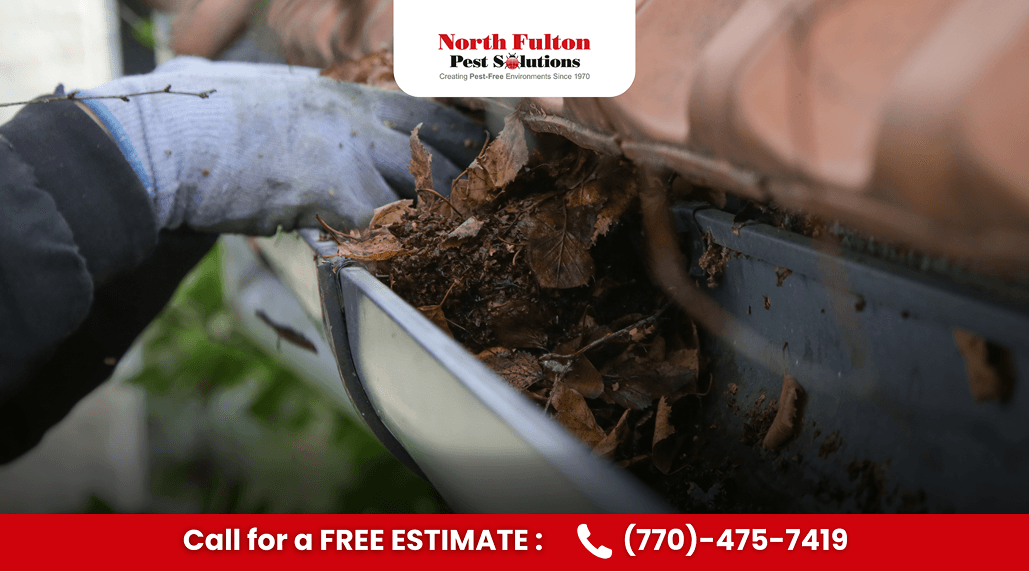
Scoop leaves from reachable gutter segments and from the top of downspout strainers. Even a small handful can slow the entire run.
Pop out visible elbow clogs — twigs at the elbow can create a “dam” that sends water over the gutter edge.
Flush problem spots
If you can safely reach, a short hose flush confirms the outlet is flowing. Stop if water backs up quickly; that section may need disassembly or a professional clean.
Check end caps & seams
Drips at end caps or seam joints leave small dirty arcs on the fascia. Photograph drips so you can address them when it’s dry (sealant or re-hang).
Minutes 10–15: Push water away from the home
Extend downspouts
Add temporary extensions (flex pipe works) to move runoff past mulch and low spots. This single step often delivers the biggest payoff after storms.
Mulch gap (6 inches)
Brush mulch back from exterior materials to create a narrow dry zone. This helps surfaces dry faster and reduces cool resting spots for adult mosquitoes.
Drainage touch-ups
Identify shallow depressions that still hold water 24–48 hours after rain. Mark them for top-dressing or minor regrade; even a small swale can move water off a lawn panel.
Minutes 15–20: Audit for mosquito drivers
Gutter covers & grates
Inspect existing guards. Any guard should be flush and stable so water sheets into the gutter—not over it.
If you lack covers and storms regularly load your gutters, adding guards can dramatically reduce maintenance between services.
Downspout accessories
Check diverters and rain barrel inlets. Ensure fine mesh over inlets/overflows is intact and taut to help prevent entry by container breeding mosquitoes.
Perimeter walk for small containers
Tip planters, saucers, toys, lids, grill covers, and tarp pockets. Refresh birdbaths and pet bowls. These quick moves every 2–3 days make a visible difference.
What “good” looks like (and how it helps)
- Clean channels, open elbows, and extensions move water away from exterior materials and planting beds, speeding dry-out times.
- Mulch pulled back 6 inches reduces damp edges where mosquitoes rest and where ants and roaches trail.
- Intact screens on rain barrel inlets/overflows keep adult mosquitoes out while you keep the water you want for the garden.
- No pooling near the home’s perimeter lowers both mosquito pressure and moisture stress on exterior materials and lower areas of the home.
Common post-storm mistakes (easy fixes)
Flushing without removing the elbow clog: water backs up and spills over the gutter edge — always check the elbow first.
Extensions aimed into mulch: runoff soaks the bed and pools against edging — add a splash block and aim to a slight grade.
Guards that sit above the drip line: water overshoots during heavy rain — guards should align so flow enters the channel.
Skipping the “small stuff”: saucers and tarp pockets breed fast; tip them the same day it rains.
Add-On Upgrades That Pay Off
Gutter covers: reduce leaf loads and keep channels freer between cleanings.
Extra downspouts on long runs: split the load so heavy bursts don’t overwhelm a single outlet.
Larger outlets/leaf traps: improve flow at the most debris-prone corners.
Permanent extensions or underground discharge to daylight: move water past footpaths and planting beds (ask for a layout that preserves grade and avoids new pooling).
When to call a pro
(Checklist before you call the expert)
For a Free Estimate, Call or Text Today!
(770) 475-7419