
Termite Risk in Atlanta’s Suburbs
From Sandy Springs, Dunwoody, and Brookhaven to Decatur, Johns Creek, Roswell, Alpharetta, Peachtree Corners, Smyrna, Marietta (East Cobb), Tucker, and Chamblee, Metro Atlanta’s warm seasons, afternoon storms, and mulch-heavy landscaping keep conditions favorable along the home’s perimeter and foundation. Subterranean termites use damp borders, planter edges, and utility penetrations as protected travel routes — often out of sight in lower areas of the home. For proactive, season-long protection designed around Atlanta conditions, see our termite control in Atlanta page.
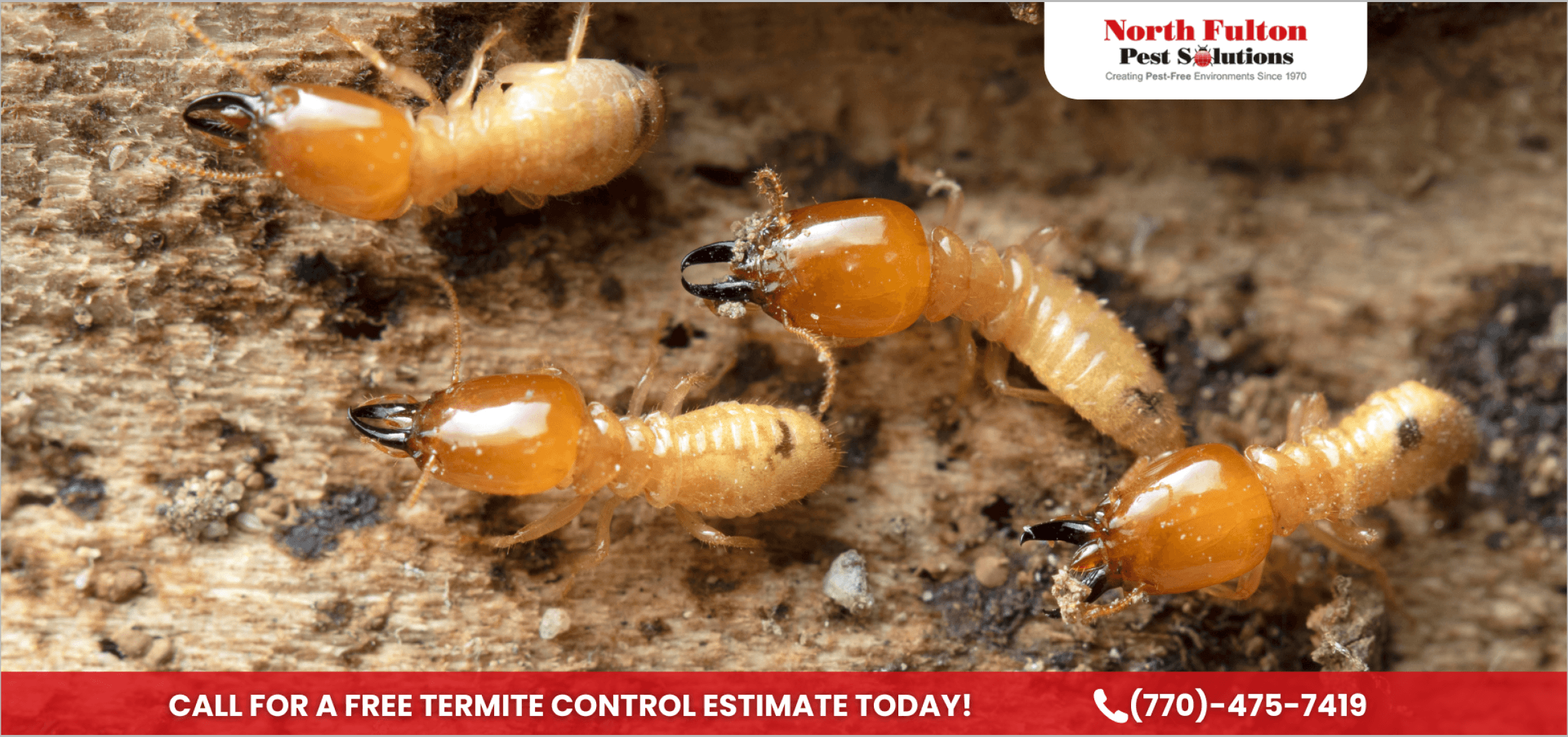
Why risk is elevated in Atlanta’s suburbs
- 1Moisture & shade: Dense canopy and irrigation keep soil damp at exterior edges, making it easier for termites to travel unseen.
- 2Landscaping & hardscape transitions: Mulch mounded to siding/brick ledges, patio borders, and decorative timbers provide cover.
- 3Utility penetrations & additions: Cable, gas, HVAC lines and porch/room additions introduce seams that become entry points if unprotected.
Early signs you can spot (often after warm rain)
- Discarded wings on window sills and door thresholds.
- Earthen (mud) tubes on foundation walls, piers, or garage expansion joints.
- Soft/bubbling paint or hollow-sounding trim near moisture.
The 72-hour homeowner plan (after storms)
- 1Hours 0 – 24: Document & dry the perimeter:
- Take photos of wings/tubes before cleaning.
- Pull mulch back 6 inches from the foundation edge; don’t bury exterior cladding or brick transitions.
- Confirm downspouts carry water away; add splash blocks or extensions.
- 2Hours 24 – 48: Fix the usual suspects:
- Re-aim irrigation heads that mist walls/windows; shorten run times in shaded beds.
- Seal pencil width gaps at cable/gas/HVAC penetrations with copper/stainless mesh + exterior-rated sealant.
- Elevate firewood and landscaping timbers off soil and away from exterior walls.
- 3Hours 48 – 72: Recheck & note hotspots:
- Walk the perimeter again after the next shower — note places that stay damp.
- If you still see new tubes or fresh wings, schedule an inspection.
Your treatment paths (plain-English overview)
Sentricon® with Always Active™ (baiting)
- What it does: Discreet stations with Recruit® HD bait are active from day one; foraging termites share the active within the population — driving colony level control with continuous monitoring.
- Best fit: Long term protection/documentation; properties with complex foundations, heavy hardscape, or evolving landscapes where a perfect continuous liquid perimeter is difficult.
Non-repellent liquids (e.g., Termidor®)
- What it does: Creates treated zones along the home’s perimeter/foundation and at critical points. Termites contact or ingest the product and transfer it among nestmates (the Transfer Effect™), shutting down structural hits quickly.
- Best fit: Confirmed activity at the structure or when fast structural protection is the priority.
Hybrid (bait + liquid)
- Why it works here: Liquids deliver quick structural relief while Sentricon® reduces colony pressure and provides ongoing monitoring — well suited to Atlanta’s storm and shade patterns.
Sentricon®, Always Active™, and Recruit® HD are trademarks of their respective owners. Termidor® is a trademark of BASF Corporation.
Timelines you can expect
- Liquids: New tubes at treated points typically stop quickly; we verify at follow ups.
- Sentricon®: Progress builds over weeks to months as colony pressure declines; monitoring then helps keep protection on track.
- Hybrid: Combines speed and durability — helping to ensure steady results through changing seasons.
Moisture & perimeter checklist (small habits, big payoff)
- Maintain a 6" mulch gap at the foundation; avoid burying exterior materials.
- Extend downspouts and add splash blocks; fix hose bib and irrigation leaks; avoid irrigation overspray.
- Trim shrubs 12–18" off exterior walls for airflow and quicker dry-out.
- Elevate firewood/timbers; keep them off soil and away from exterior walls.
- Seal gaps around cable/gas/HVAC lines with mesh + exterior sealant.
These steps won’t replace treatment, but they help prevent rebounds and support long-term protection.
What our visit includes (so you know what happens)
We start with a full inspection of the structure to be treated and map vulnerable and conducive conditions (patio borders, additions, utility lines, etc.). You’ll receive a plain English plan — Sentricon®, non-repellent liquids, or a hybrid — plus homeowner steps to help speed results and a follow-up schedule with documentation — for your peace of mind.
When to call us right away
- You see wings or tubes after a warm rain.
- You notice soft/bubbling paint near moisture or hollow sounding trim.
- Past activity was noted and you’ve changed landscaping, irrigation, or hardscape.