
Rain Barrel & Pond Owners in Cumming: Keep the Water, Cut the Bites
In Cumming, GA, rain barrels and backyard ponds are great for landscapes, but they can also attract container-breeding mosquitoes after late-day storms. The goal isn’t to drain your features; it’s to keep water, but cut the bites with a few practical habits and targeted treatment where appropriate. This Cumming-specific guide covers what to check after rain, how to set up barrels and ponds so they’re less attractive to mosquitoes, and when a professional mosquito control program makes sense.
Why Barrels & Ponds Drive Mosquito Pressure Here
Summer pop-up storms and routine irrigation leave thin films of water around lids, inlets, and overflow points. In many Cumming neighborhoods, especially near Lake Lanier and local creek corridors, shaded yards keep surfaces cool and damp, creating ideal resting zones on the undersides of leaves. Add a few clogged gutters, tarp pockets, or an unscreened rain-barrel inlet and you have everything container mosquitoes need to breed quickly.
Ladder caution: only use a stable ladder on level ground; follow manufacturer guidance. If a section is out of reach, skip it and note it for a pro.
Quick Audit (5 Minutes, Big Payoff)
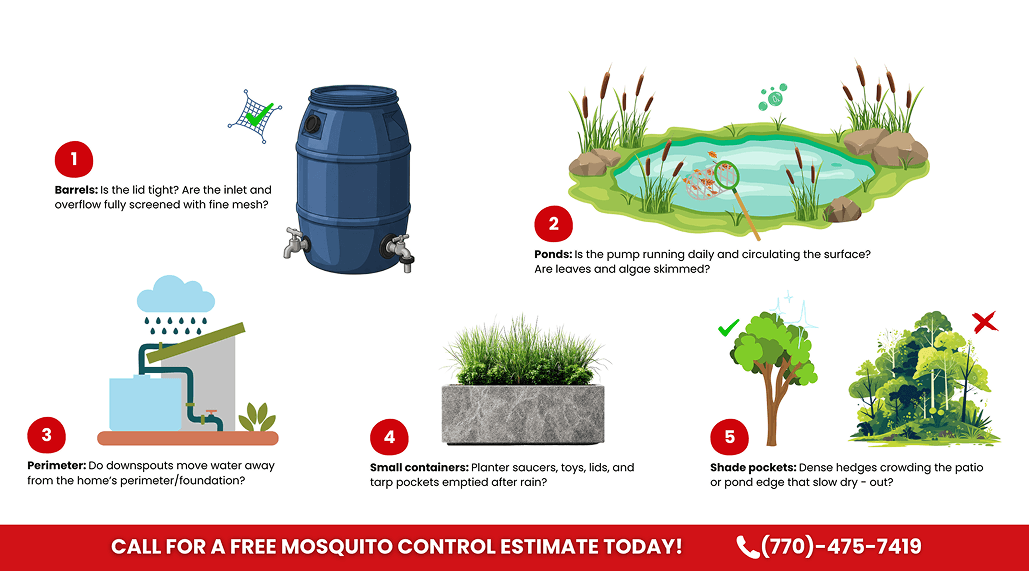
- 1Barrels: Is the lid tight? Are the inlet and overflow fully screened with fine mesh?
- 2Ponds: Is the pump running daily and circulating the surface? Are leaves and algae skimmed?
- 3Perimeter: Do downspouts move water away from the home’s perimeter/foundation?
- 4Small containers: Planter saucers, toys, lids, and tarp pockets emptied after rain?
- 5Shade pockets: Dense hedges crowding the patio or pond edge that slow dry-out?
If two or more answers are “no,” bites typically follow within days of a storm.
Rain Barrels: Keep the Capture, Block the Mosquitoes
Use a true lid + fine mesh.
A tight-fitting lid is step one; a fine mesh (window-screen grade or finer) over the inlet and overflow blocks adult access. Check that the mesh is taut, undamaged, and firmly secured with weather-resistant banding or a screw-on collar.
Screen every opening (not just the top).
Mosquitoes exploit gaps at spigots, diverters, and overflow elbows. Cap unused outlets and screen any unavoidable vents. Where you can’t screen, consider a short length of stocking or mesh sleeve secured with a zip tie as a temporary solution.
Keep water moving (or contained).
Empty or use stored water regularly. If a barrel will sit for a while, ensure all access points are screened and the lid is sealed. When not in use, drain and dry.
Mind the overflow path.
Direct overflow to a splash block or extension so water moves away from the home and doesn’t pool beside planting beds. Maintain a 6" mulch gap along the home’s perimeter/foundation to speed drying.
When a larvicide makes sense.
For barrels or cisterns that must hold water longer, consider a labeled mosquito larvicide (e.g., dunks) only where appropriate and permitted. Follow the label exactly; rotate or refresh per directions.
Ponds & Water Features: Beauty Without the Bites
Run the pump daily.
Circulation breaks the surface film larvae need to breathe. A modest waterfall, bubbler, or surface agitator helps disrupt egg rafts and speeds dry-out around edges.
Skim leaves and thin edge plants.
Decaying leaves and dense plant mats create still pockets. Skim weekly, thin shoreline plants to improve airflow, and keep stone borders clean so you can spot and remove debris quickly.
Right fish, right load (where appropriate).
If it’s a true ornamental pond, consult your pond supplier about appropriate species and stocking levels — overcrowding adds nutrients and algae, which can increase mosquito pressure.
Treat contained features when labeled.
For small features or basins where fish are not present, use labeled larvicides as directed. Never use products off label in ponds with fish, amphibians, or beneficial insects.
Control splash + seep.
Check liners and edges after storms. Top up low water, repair splash leaks, and re-level borders so water recirculates rather than pooling in soil or mulch.
After-Storm 72-Hour Plan (Cumming Edition)
Hours 0–24 — Dump & drain:
Empty planter saucers, toys, lids, grill covers, and tarp pockets; refresh birdbaths; tighten or re-angle tarps so water can’t pool.
Hours 24–48 — Dry the perimeter:
Clear gutters, add splash blocks/extend downspouts, brush mulch back to maintain a 6" gap, and re-aim irrigation that mists walls or hardscape. Water early mornings.
Hours 48–72 — Deny resting spots:
Trim shrubs 12–18" off exterior walls, thin dense hedges near seating zones, and add a box/ceiling fan on the patio to disrupt landings at peak hours.
Service Notes & Expectations
Many homes notice improvement within 24–72 hours when dump/dry habits are combined with the first professional service.
Screened openings, better circulation, and cleaner overflow paths usually help reduce mosquito pressure further.
Recheck screens, pump performance, and overflow paths after the next storm to help keep results steady through the season.